
Going and Ground Conditions in UK Racing
 Available in US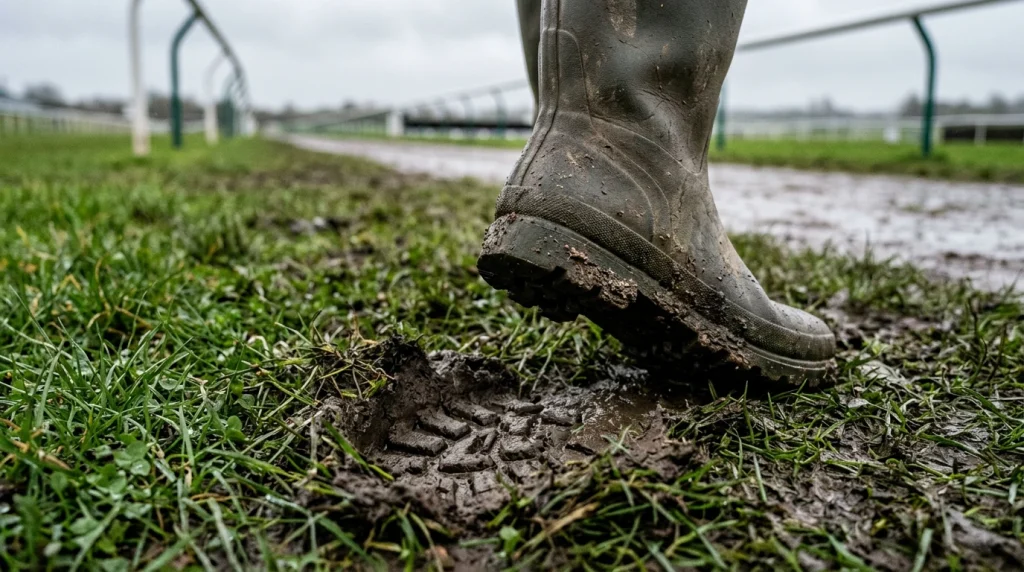
Assessing GoingStick Data and Ground Conditions
Before I look at the runners, before I look at the prices, before I look at the trainers, I check the going. The going report comes out the day before the meeting, refines overnight, and is updated again on the morning of racing. By the time the first race goes off, the published description should be accurate to within a step on the scale. Knowing that step, and knowing which horses on the card prefer it, is the single most influential filter I apply to any UK race I bet on. The form figures lie to you if the ground does not suit; the trainer numbers compress; the pace map distorts. Get the going wrong and everything downstream is wrong.
This piece is a field guide to how I read going in UK racing. I will walk through the official scale and what each step means, the GoingStick measurement system that has supplemented the clerk’s verbal description over the last decade, how to identify horses with strong going preferences, how going interacts with the pace setup, and what going-driven non-runner declarations tell you about the field that actually goes to post. The aim is that by the end of the piece you will be reading the going column with the same attention you give the form column — because, on most UK racing weekends, the going column is where the real edge lives.
The Going Scale Explained
UK racing’s official going scale runs from “heavy” at the wet end through “soft”, “good to soft”, “good”, “good to firm” and “firm” at the dry end. Each step represents a meaningful change in the resistance the ground offers to a horse’s stride, and a horse’s effort to maintain pace varies non-linearly with that resistance. Moving from “good” to “good to soft” is a one-step change in nomenclature but can represent a significant tactical shift for many horses — closers can gain ground in the heavier conditions, front-runners can struggle to keep their early advantage.
The clerk of the course publishes the description and is responsible for the accuracy of the call. The clerk’s assessment is based on a combination of measured penetrometer readings, GoingStick measurements (more on that in the next section), visual inspection, and tactile assessment by walking the course. The description published is the formal record, and bookmakers price the race assuming the description is accurate. When the going changes during a meeting — which it often does on wet afternoons — the clerk issues a revised description that updates the official record.
The reference point I keep is the UK favourite strike rate, which sits between thirty and thirty-five per cent across all racing. That figure varies materially with the going. Favourites tend to perform closer to the upper end of that range on good and good-to-firm ground, where the form book runs cleanly and the better horses can express their ability. Favourites tend to perform closer to the lower end on heavy and soft ground, where surprise winners are more common because the horses able to handle the conditions are not always the horses with the strongest form figures. Knowing where the favourite strike rate is likely to sit on a given day, given the going, is the first input I bring to a Saturday card.
The GoingStick and What It Adds
The GoingStick is a standardised measurement device that the clerk uses to record the resistance of the ground at multiple points around the course. The instrument is essentially a metal probe attached to a torque sensor — it is pressed into the ground and rotated, and the force required to rotate it is recorded as a numerical reading on a scale that runs from below 5 (heavy ground) to above 11 (firm ground). The clerk records readings at multiple points along the course and publishes both the verbal description and the average GoingStick reading.
The value of the GoingStick is that it converts a subjective description into a number. The clerk’s verbal description is the formal record, but the number gives you finer resolution — a “good to soft” with a GoingStick of 7.2 is meaningfully different from a “good to soft” with a GoingStick of 6.4, even though the verbal description is identical. The first is closer to good ground; the second is closer to soft. Horses with marginal going preferences will perform differently across that range, and a punter who reads the GoingStick alongside the verbal description has more information than one who reads only the verbal.
The limit of the GoingStick is that it measures the ground at a single point in time and gives an average across the recorded points. The actual ground a horse runs on varies across the width of the course — the inside rail is often softer than the outer rail at venues with extensive use — and changes during the meeting as further racing churns the surface. The published reading is a snapshot, not a constant, and the smart punters treat it accordingly.
Identifying Horses With Going Preferences
Some horses have strong going preferences that persist across their careers. A soft-ground specialist may have form figures that look unimpressive on the surface but show a consistent pattern of best performances on heavy or soft ground. A fast-ground specialist may show the opposite — strong figures on good to firm and indifferent figures whenever the ground softens. Identifying these preferences is the work that separates form-readers from racecard-skimmers.
The way I build a going profile for a horse is to look at the going description for each of its last twelve to fifteen runs, alongside the finishing position and the official sectional time if available. A horse showing best figures on three or more runs on heavy ground, with weaker figures on good or faster ground, is a soft-ground horse and should be priced accordingly. The same logic applies in the opposite direction. The threshold I use is at least three confirming runs at the preferred going — anything less is provisional, and I treat it as a working hypothesis rather than a settled read.
The scale of the work involved is meaningful. With approximately 12,500 horses registered to race in the UK in any given year, the universe of going preferences is large but tractable. The yards I follow most closely produce a relatively stable group of around five hundred horses I encounter regularly, and I keep a one-line note for each on going preference, distance preference and class preference. The note is refreshed every six months. The work pays for itself many times over when the going on a Saturday morning matches the preference of a horse in your shortlist at a generous price.
The mistake to avoid is treating every horse as having a strong preference. Many horses run effectively across a wide going range and do not have a meaningful preference at all. The work is to identify the horses with preferences and ignore the going column for the rest. Trying to read going preference into every horse leads to overfitting and to bad bets supported by spurious patterns.
Going and Pace — How They Interact
Going changes the pace of a race in ways that affect every horse on the card, not just the going specialists. On heavy ground, the early pace slows because front-runners cannot sustain the same speeds, and closers benefit from a shorter run-in to make up ground. On firm ground, the early pace sharpens, and front-runners with a turn of foot can dictate the race from the gate. The pace map a punter builds on the morning of racing needs to be adjusted for the going, not built once and applied to every meeting in the same form.
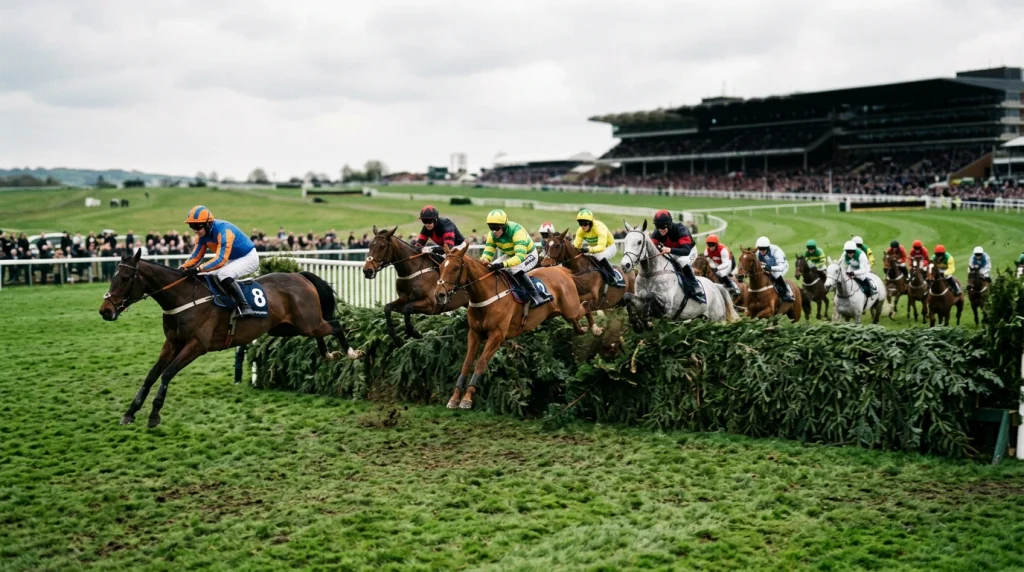
The pace-and-going interaction is most pronounced at the extremes of the going scale. On heavy ground at jumps meetings, the race becomes a war of attrition and the best stayers win regardless of how the early pace develops. On firm ground at flat meetings, the best speed horses win regardless of how the late pace develops. The pace setup matters most in the middle of the scale — good to soft and good to firm — where the going does not impose a dominant tactical pattern and the pace map carries most of its information value.
For a deeper walk through how I build the pace map itself, my piece on pace and run style analysis for UK racing covers the mechanics in detail and shows how I write the map by hand before opening the price column. The interaction with going is the natural extension of that work — the pace map is the structure, and the going is the lens through which that structure plays out on the day.
Non-Runners and What They Tell You About the Field
Non-runner declarations driven by going are one of the more revealing pieces of information on a Saturday morning. When the ground turns softer than the official forecast and a yard pulls a fast-ground horse from a race, the action tells you the yard reads the going as a problem for that horse. When yards collectively pull multiple horses on the morning of racing, the going has shifted enough to change the entire field structure, and the remaining runners are the ones whose connections see no obstacle.
The remaining field after non-runner declarations is more likely to be populated by horses suited to the going than the original entry list. The implication is that the going is doing double work — it is selecting the field that races as well as conditioning how they race. A favourite who looked vulnerable in the original entry list may become a stronger favourite once non-runners declare, because the rivals who would have been most competitive on different going have been pulled.
The work for a punter is to wait for the final declarations before fixing the shortlist. A morning shortlist based on the original entry list is a working draft. The final declarations, usually published an hour or so before the race, set the actual field that will race. Bookmakers re-price after declarations, and the price movements at that point can reveal information about which horses the yards continue to support and which are running primarily because pulling them carries operational costs the connections prefer to avoid.
Treating Going as the Foundation Filter
The going column is not glamorous. It is short, often blunt, and changes incrementally during a meeting in ways that most punters find tedious to track. It is also the single most under-read piece of information on a UK racing card, because casual bettors look at form figures while the smart money looks at going first and form figures second. The work to read going well is not technical — it is mostly the discipline to check the going before anything else, to maintain a database of horses with strong preferences, and to wait for final declarations before committing a bet. That discipline pays season after season because the conditions of the ground are the conditions under which every other piece of analysis plays out. Build the going habit and the rest of your work compounds on top of it. Skip it and everything else you do is partial.
Articles and Strategies


Published by the FurlongLab team.
