
Draw Bias and Stall Advantages on UK Racecourses
 Available in US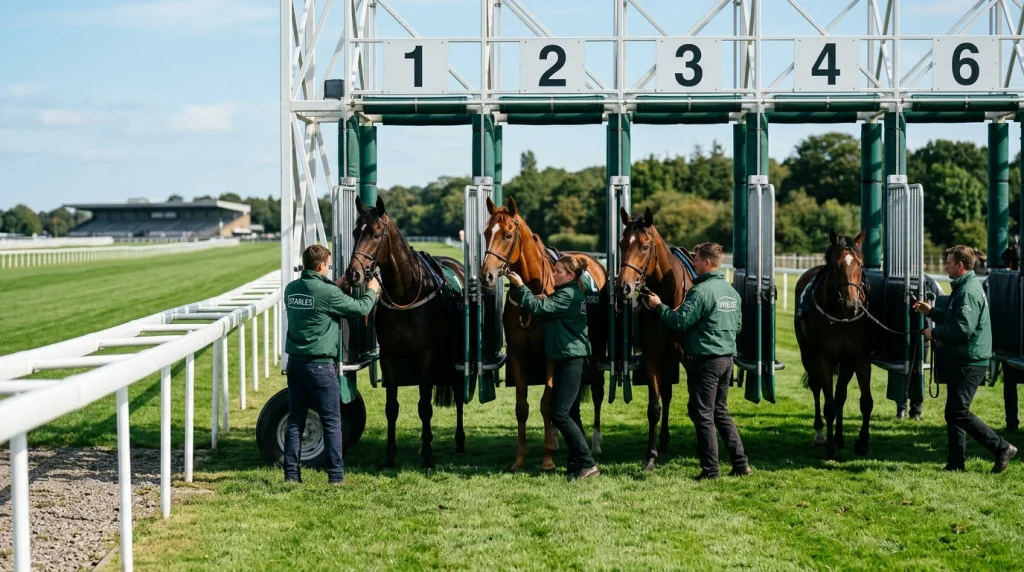
Identifying True Draw Bias on UK Racecourses
The first time someone tried to sell me a “draw bias system” I was twenty-three and three pints deep in a pub near Chester. The pitch was simple: low number, short trip, soft going, back it. The pitch was also wrong, because the bloke had quietly folded pace bias into the same bucket. Twelve years later I still hear that confusion in punters’ questions, and it costs them real money.
Draw bias means a physical advantage tied to the starting stall on a specific course over a specific distance. Stall one at Beverley over five furlongs is not the same as stall one at Newmarket over the Rowley Mile. Pace bias is a different animal entirely — it describes how the unfolding tempo of a race favours front-runners or hold-up horses, regardless of where they jumped from. Sometimes the two interact. Often they don’t. Confusing them is the single most common mistake I see in beginners’ models.
The UK is unusually rich for draw analysis because our tracks vary so wildly. Chester is a left-handed bowl with bends that never properly straighten. Beverley has a hill in the wrong place. Newmarket has two straight courses that share almost nothing in common with each other. Each of those quirks creates a different bias map, and any draw system worth running has to respect that.
What physically creates a draw bias
Picture a five-furlong sprint at a tight left-handed track. The runners break, and within a furlong they’re already leaning into the first bend. The horse drawn in stall one has the shortest path. The horse drawn in stall fourteen has to either gun it across to the rail in the opening hundred yards or accept that he’s running an extra few lengths. That’s it. That’s the entire mechanism.
Three factors stack to make a real bias. First, the geometry of the bend — sharp turns punish wide draws because the path-length difference compounds. Second, the rail position — when a course pulls the running rail in to protect the ground, the inside two or three stalls effectively get a private lane. Third, the going — heavily watered or naturally soft ground often runs slower wide of the rail, turning a small geometric edge into a meaningful time edge.
Then there are the secondary effects that the form book rarely flags. The position of the stalls themselves — when the starter parks them on the stands’ side versus the far side, the same numbered stall can be on opposite sides of the track. Jockeys know this and watch the announcements. A low draw at Goodwood’s six-furlong start on Tuesday is geographically the opposite of a low draw at the same trip on Wednesday. Anyone modelling draw without checking stall position is modelling noise.
Finally, field size matters more than people credit. In a six-runner race the draw is almost cosmetic. In a sixteen-runner cavalry charge it’s half the picture. The same course, the same distance, the same going — wildly different bias signals depending on how full the gates are.
A favorable stall number means very little unless you combine it with accurate pace and run style analysis to predict how the race will unfold.
Low draw versus high draw — the actual mechanics
Let me give you a concrete piece of data that surprises every beginner I show it to. Across UK sprints from five furlongs up to a mile on tracks with tight bends, low draws — stalls one to three — win roughly 28% of races despite representing only 15-20% of the average field. That’s not a marginal edge. That’s a structural one, and it has held up for years in the LightSpeed Stats database.
The reverse pattern shows up on big galloping tracks with long straights and gentle bends. Doncaster’s straight mile, Newmarket’s Rowley, York over six — here the draw matters far less than the speed figure and the pace map. Horses can drift across, find their rhythm, and the geometry doesn’t punish wide stalls because there’s no bend to negotiate before the run-in.
I keep a mental three-tier classification when I’m scanning the next day’s cards. Tier one: tracks where the draw is dispositive — Chester, Beverley five-furlong, Catterick five-furlong on the round, Brighton at certain trips. Tier two: tracks where draw nudges the price but doesn’t dominate — Sandown sprints, Goodwood at most distances, Bath. Tier three: tracks where I ignore the draw entirely unless something extreme shows up in the field size or going — most straight-course Newmarket fixtures, Newbury, Doncaster.
The thing nobody tells you in beginner guides is that the bias drifts. A track that biased low for years can flatten out after a re-rail or a watering policy change. I cross-check the rolling three-year strike rate against the rolling fifteen-year rate, and if they diverge meaningfully I trust the recent one. The horses don’t read the historical guides.
Key UK tracks where the bias still moves the price
Beverley is the obvious starting point. The five-furlong start sits on a rising line, and stall one historically wins about twice as often as you’d expect from random allocation. The horses drawn wide have to give up the rail and then chase up the hill in heavier ground. I’ve been at Beverley in late September watching a 5/1 chance romp in from stall one against a 6/4 favourite from stall ten, and the post-mortem was the same line every time: the favourite was a better horse who jumped from the wrong slot.
Chester is the textbook case taught to every new analyst, and for good reason — the entire course is a left-handed bend, so there is no straight bit where wide draws can recover. Over five and six furlongs the inside stalls have an edge that survives almost any going and field size. Over a mile and longer the bias softens slightly because the early jostle settles, but you still see wide draws producing weaker than expected returns. I do not lay outside-drawn favourites at Chester. I back inside-drawn outsiders if the price is right.
Catterick’s five-furlong course is downhill, which sounds neutral until you realise the bend comes early and is sharp. Low draws hold the rail through the turn while wide draws have to manufacture pace early — which costs them in the last furlong. Brighton, with its undulating downhill camber, gives a different sort of bias: the low side is where horses can balance themselves rather than fight the slope.
Goodwood is the trap. The five-furlong straight is famously demanding because the stands’ side gets a slight ground advantage when watering is recent, but the actual draw advantage flips depending on which side jockeys collectively decide to race. Some days the whole field comes to the near rail. Some days the far side leads. Until you see the early pace pattern in the first three races of the meeting, treating Goodwood’s draw as fixed is asking to be wrong-footed.
Going and the draw — when soft ground rewrites the map
Soft ground does odd things to draw bias, and not always in the direction beginners expect. The intuition is that soft going magnifies the inside advantage because the rail position offers the firmest strip. Half the time that’s correct. The other half, the rail has been chewed up by previous races and the wider draws find better cut.
The mechanism to watch is wear. On a Saturday card with eight races, the inside two yards of the track on a left-handed course will have been pounded by every previous winner. By race six the going on the rail is materially slower than the going three horses wide. Jockeys notice this faster than the betting market does, which is why you sometimes see the favourite drift sharply in-running and the high-draw horse come storming up the centre of the track. That’s not luck. That’s accumulated turf damage.
My rule for soft-ground sprints: trust the morning’s first-race winning line. If the early winners are sticking to the rail, the bias is intact. If they’re coming wide, the bias is gone for the day and your draw model needs to be muted.
When pace overrides draw
Pace can cancel a draw bias entirely. If the only confirmed front-runner in a Chester five-furlong jumps from stall eight, he will cross to the rail in the first hundred yards and the inside draws find themselves boxed behind a slower-paced rival. The short version is this: read the run-style column before you read the stall number. A pace map that suggests no inside-drawn horse will lead is a pace map that just neutralised your draw edge. I keep a quick mental rule — if the three biggest pace figures in a Chester sprint sit in stalls six, seven and eight, my low-draw angle becomes a bet against the field, not a bet on it, and the price has to compensate for the extra work the inside runners will be asked to do early.
Discover more track-specific angles by exploring the expert horse racing systems we publish regularly.
Using draw bias as part of a real system
Here’s where most punters get into trouble. They identify a bias, they back every low-drawn horse at the relevant tracks, and within a season they’re down. Draw bias is a filter, not a signal. By itself it produces no edge because the market prices it in — sometimes overprices it, when fashion takes hold.
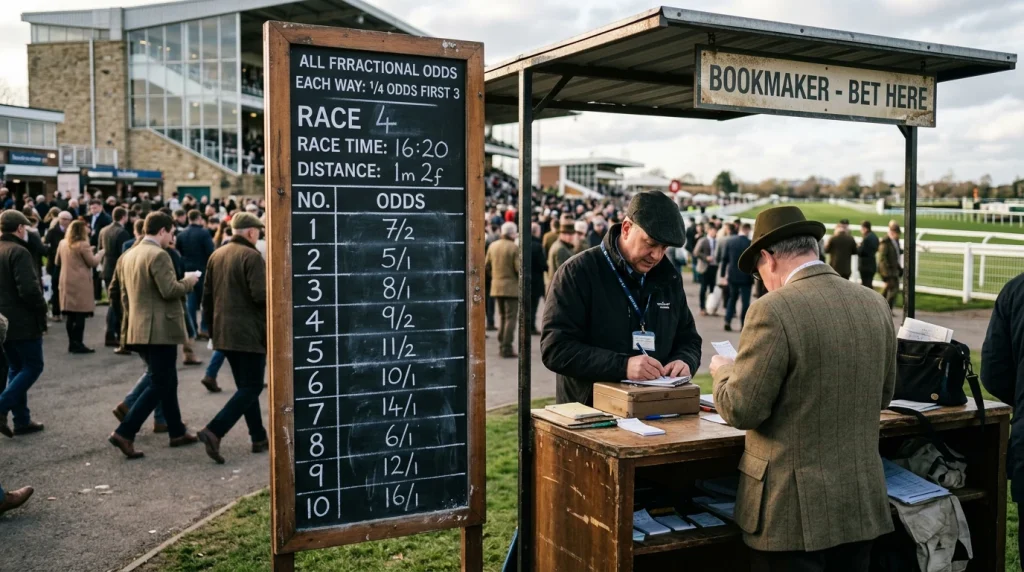
What I do instead: I treat the draw as one of three layers in a sprint shortlist. Layer one — does the horse have a recent figure that puts him in the top two on raw ability? Layer two — does he have a price that implies a meaningful probability of winning, ideally with some BOG cushion? Layer three — is he drawn in a slot that the track’s recent results say he should be? If all three line up, the horse goes on the shortlist. If only the draw is there, I move on.
Race Advisor’s editorial line on this is worth remembering: “There is an absolute guarantee that if you are backing horses regardless of the price you will lose money in the long run.” The same applies to draws. Backing stall one at Beverley regardless of price is identical to backing the favourite blind — both are losing strategies even though both contain real information. The information only becomes profit when it intersects with a price the market has misjudged.
One more thing. Keep a separate column in your records for draw-driven bets versus other bets. After 200 trades you’ll know whether your draw read is adding edge or just adding turnover. If your draw-flagged bets show a CLV identical to your non-draw bets, you’ve been kidding yourself, and it’s better to find out at 200 than at 2,000. If you want to see how draws feed into a broader handicap angle, my piece on the UK handicap horse racing system walks through exactly how draw, mark and pace combine when I’m building a Saturday shortlist.
FAQ
Where draw analysis sits in a serious system
Draw bias is one of the cleanest signals in UK flat racing because it is rooted in physical geometry rather than form interpretation. That makes it tempting, and that’s the trap. The clean signal is the bit the market sees most clearly, so the easy edge has already been priced. The real money sits in the corners — the days when watering policy changes the bias, the meetings when a wide-drawn front-runner cancels it, the years when a re-rail moves the whole pattern. Keep a notebook, keep a separate column in your bet log, and treat the stall number as one ingredient in a longer recipe. That’s how draws actually pay.
Articles and Strategies

Published by the FurlongLab team.
